
In Urethane Casting (also called urethane molding, RTV molding, or RTV mold making), a liquid material is poured into a mold containing a hollow cavity in the shape of the part, then allowed to solidify. The technique allows for the creation of small quantities of production-ready parts without the added expense of machine tooling.
The ProtoCAM Distinction
Here at ProtoCAM, we do Urethane Casting differently. Our experienced engineers work with our customers on their unique Urethane Casting projects to understand exactly what their goals are and what they would like their end product to be. The ProtoCAM Distinction means that we’re available throughout the entire Urethane Casting additive manufacturing process, from initial idea to end product, and we have the capabilities and know-how to guide any project–from prototype to production–to completion.
Your personal project engineer is regularly available to assist you in choosing a material, technology, process, post-processing method, and more, and our friendly customer service representatives can update you on your project timeline, cost, and delivery requirements. Because we’re ISO 9001:2015 certified, you can be assured that your Urethane Casting prototypes and parts will be completed according to our high quality standards and produced and delivered to you as quickly as possible, with continuous improvement being a central goal to our facility’s procedures in order to meet our customers’ ever-evolving requirements. Our instant quoting platform means you can order your parts immediately, while our engineer-assisted quoting form allows you to connect further with our engineers on your more in-depth project, and with each order placed, you can be assured that we’re always working towards more sustainable and environmentally-friendly standards of material disposal and recycling, packaging methods, and more.
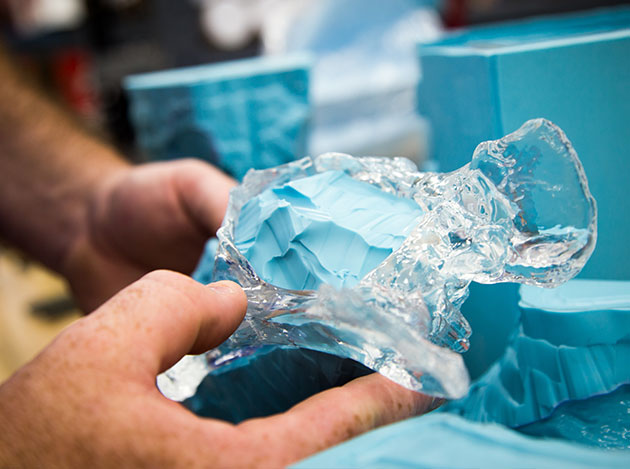
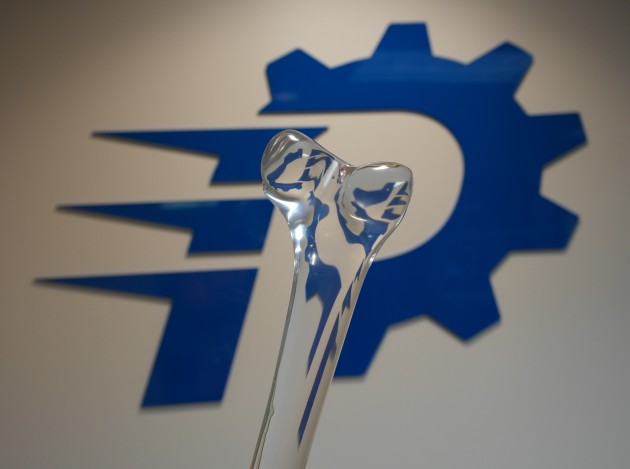
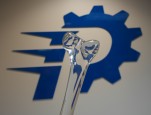
Our Urethane Casting services can be used to create both clear and matte parts for small-batch manufacturing, functional prototyping, pre-production testing, alpha and beta builds, and more. In choosing Urethane Casting at ProtoCAM, you’re choosing accuracy across copies, versatility in part production, and exceptional speed of service.
Read on to learn all ProtoCAM’s unique Urethane Casting services, or request a quote now to start experiencing the ProtoCAM Distinction for yourself.
What is Urethane Casting
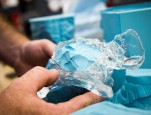
Urethane Casting (or polyurethane casting, or urethane moldings) is ideal for additive manufacturing short-run production of pieces made from a plastic injection-molded resin. Often performed after an RTV mold (also called a room temperature vulcanization mold) is made from a Stereolithography (SLA) prototype, urethane castings are a cost-effective way to reproduce production-ready parts in small quantities.
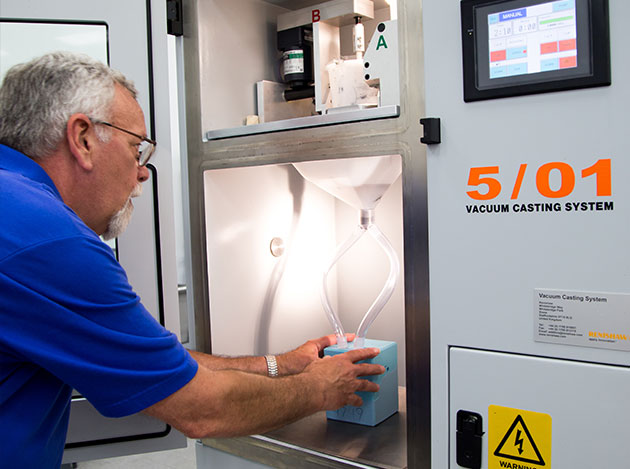
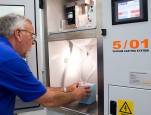
After a mold is created, Urethane Casting material – synonymous with polyurethane casting material – is injected into the mold’s “void.” This allows for near-perfect copies of the original prototype to be created. We have low durometer urethanes that can be very soft, but we can also make stereolithography molds and inject silicone rubber into it.
Steps For Creating a Urethane Casting include the following.
- Risers are put on the part to allow air to escape from the final mold
- A thin film is attached to the part, which will act as a seam for the final mold
- A box is built around the entire structure, and it is filled with silicone rubber
- Once the silicone rubber has cured, the box and risers are removed, the mold is opened at its seam, and the original part is removed
- The mold is ready for use and any type of urethane can now be injected into the mold to create an exact duplicate of the original
Urethane Casting in Action
Urethane Casting Case Studies & Blogs
As we produce such a wide variety of products and projects for many different markets and industries using our Urethane Casting technology, we like to showcase all the unique ways Urethane Casting can be utilized to create end products and Urethane Casting prototypes. Check out some of the below case studies to experience the multi-faceted capabilities inherent with choosing Urethane Casting from ProtoCAM!
AM for Production: From Prototype to Finished Part with DGH’s Scanmate Flex
Medical Innovations Made Possible with 3D Printing
Additive Manufacturing and Urethane Casting for Consumer Goods
5 Things to Do Before Requesting A Rapid Prototype Quote
Guideline for Additive Manufacturing Success
Threaded Brass Inserts for Rapid Prototyping
Choosing The Right Additive Manufacturing Technique
Clear Finish Rapid Prototyping
Why Choose Urethane Casting
Accuracy
A high degree of accuracy is maintained in the copy – including the surface finish.
Versatility
Parts without draft, or with undercuts, can be reproduced. Likewise, different materials can be used with the same mold, making it possible to test designs with a variety of material properties.
Speed
Several parts can be created per shift once the mold is complete.
Typical Urethane Casting Use Cases
| Small-batch manufacturing | Engineering design verification | Alpha and beta builds |
| Pre-production parts | Functional prototypes |


