
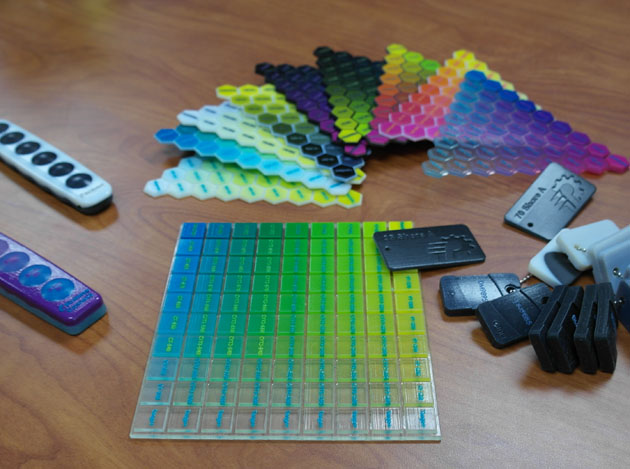
PolyJet 3D printers jet tiny droplets of liquid photopolymer onto a build tray, where they are instantly cured by ultraviolet light. Our state-of-the-art Objet500 Connex3 PolyJet 3D printer is capable of incorporating as many as 46 colors into a single rigid or flexible prototype.
The ProtoCAM Distinction
Here at ProtoCAM, we do PolyJet differently. Our experienced engineers work with our customers on their unique PolyJet projects to understand exactly what their goals are and what they would like their end product to be. The ProtoCAM Distinction means that we’re available throughout the entire PolyJet additive manufacturing process, from initial idea to end product, and we have the capabilities and know-how to guide any project–from prototype to production–to completion.
Your personal project engineer is regularly available to assist you in choosing a material, technology, process, post-processing method, and more, and our friendly customer service representatives can update you on your project timeline, cost, and delivery requirements. Because we’re ISO 9001:2015 certified, you can be assured that your PolyJet prototypes and parts will be completed according to our high quality standards and produced and delivered to you as quickly as possible, with continuous improvement being a central goal to our facility’s procedures in order to meet our customers’ ever-evolving requirements. Our instant quoting platform means you can order your parts immediately, while our engineer-assisted quoting form allows you to connect further with our engineers on your more in-depth project, and with each order placed, you can be assured that we’re always working towards more sustainable and environmentally-friendly standards of material disposal and recycling, packaging methods, and more.
In offering our PolyJet services, we utilize a large-frame system produced by Stratasys, which has a build envelope of 15.5” x 19.5” x 8.0″. Our printer can be used to create parts in multiple durometers and colors, with high quality, and with the ability to utilize multiple post-processing techniques, including sanding, painting, and more. We also offer a variety of materials and the ability to combine multiple materials into one part; see our PolyJet Material Data list below for more details on all the materials we have available.
Read on to learn all ProtoCAM’s unique PolyJet services, or request a quote now to start experiencing the ProtoCAM Distinction for yourself.

What is PolyJet 3D Printing
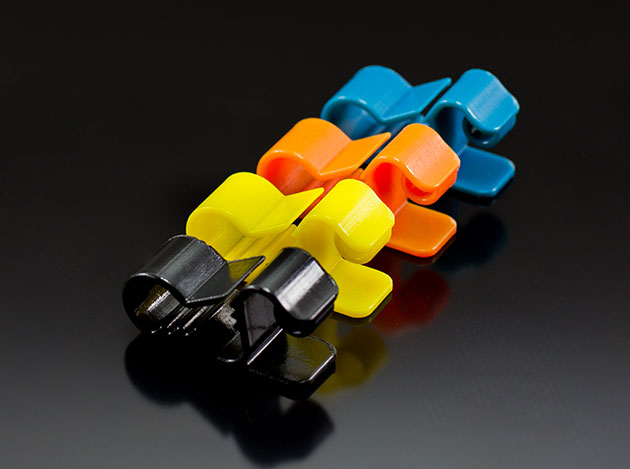
PolyJet 3D printing is one of the most versatile of our additive manufacturing services and provides a fast, cost-effective way to achieve visually striking prototypes for pre-production and short-run production parts. Our advanced 3D printing equipment is the latest in PolyJet innovation and allows for fast product creation in complex shapes and forms.
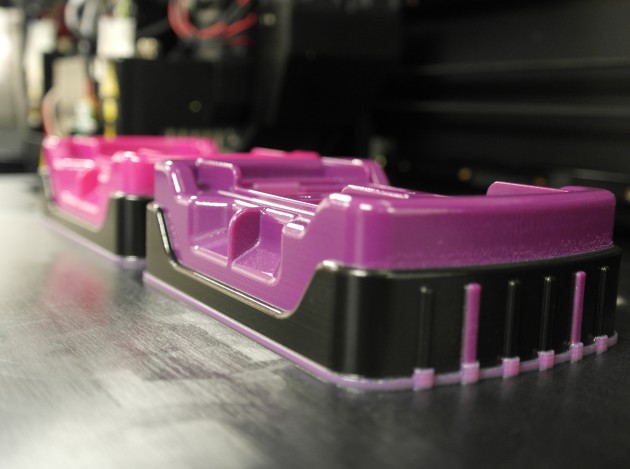
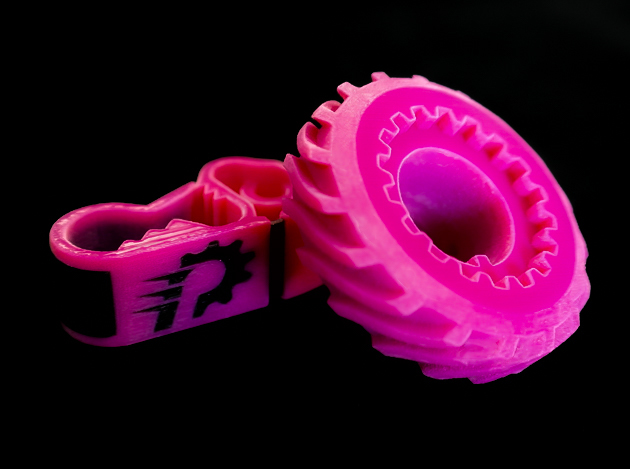
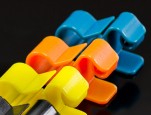
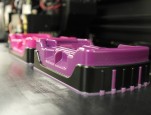
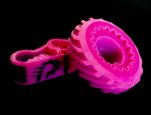
PolyJet 3D printing is well-suited for parts with multiple material requirements such as overlays or inserts with differing levels of flexibility, and can create prototypes that incorporate a full palette of colors. In PolyJet 3D Printing, a photopolymer (light-activated resin) is sprayed from a printhead and cured with a UV lamp to quickly make small quantities of parts.
Benefits of this 3D printing additive manufacturing process include the fine layer thickness in the Z dimension – it allows for small features along sidewalls and up-facing surfaces. PolyJet 3D printing also uses a wide range of materials that can be tuned to create any number of durometers from hard, to quite soft.
PolyJet 3D Printing Tolerances
The technology has a general tolerance of +/- 0.005″ for 1st inch plus +/- 0.002″ for each add inch.
Need to compare technology tolerances? Click here to view our tolerance comparison chart.
PolyJet 3D Printing in Action
PolyJet Case Studies & Blogs
As we produce such a wide variety of products and projects for many different markets and industries using our PolyJet technology, we like to showcase all the unique ways PolyJet can be utilized to create end products and PolyJet prototypes. Check out some of the below case studies to experience the multi-faceted capabilities inherent with choosing PolyJet from ProtoCAM!
Medical Innovations Made Possible with 3D Printing
Utilizing 3D Printing for Education
Going Green in the 3D Printing Industry
From SLA to MJF: 3D Printing Through the Years
The Advantages of Additive Manufacturing to Injection Molders
Auto Industry Additive Manufacturing
What Colors Can I Choose for My PolyJet 3D Prototype?
Post Processing for Rapid Prototypes
Which Additive Manufacturing Method is Best
Prosthesis Development Case Study
Automotive Industry Improvements with Additive Manufacturing
Additive 3D Printing Color Choices
Choosing the Right PolyJet Materials and Finishes
Best Methods for Rapid Prototyping Metal
Choosing The Right Additive Manufacturing Technique
Featured Technique: PolyJet 3D Printing Service
Why Choose PolyJet 3D Printing
ProtoCAM works with customers to select the best 3D printing materials for the job based on the part to be made and its application. We offer and use only the most advanced Polyjet 3D printing materials, including the full line of Tango and Vero materials from Objet, a leading 3D printing materials manufacturer.
With the ability to print multiple colors, durometers, and materials into a single build, most anything’s possible when using PolyJet 3D printing to produce your 3D parts and prototypes.
Typical PolyJet 3D Printing Use Cases
| Multi-material prototypes | Multi-color prototypes | Soft-touch components |
| Simulated polypropylene | Simulated rubber | Click here to see available finishes |


